BEFORE YOU READ:
1. What is a passer-by?
2. What is a shelter? How is it different from a home?
3. Read the headings. How do you predict Nan would finish this sentence: “Since Mom came…”
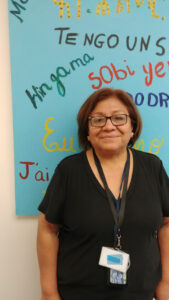
Nan Liu
Moving Away from Home
In 2017, I got a job in Beijing for one year. That was my first time being away from my parents. Since I was born, I had never left home to live by myself.
Feeling Like a Passer-by in a Strange City
I moved to a small apartment. It became my temporary home. I always worked very late. When I got home at night, I just went to bed and fell asleep. Did the apartment feel comfortable? Did it feel like home? I didn’t know. I didn’t have time to think about it. It was just a place for me to rest and arrange my luggage. Everything in this city felt strange to me. I told myself, “You are just a passer-by.”
Time went by fast. I spent the summer and fall in that small shelter. The first snowflakes were starting to fall. My birthday was coming soon. My mother came to celebrate my birthday. She planned to stay with me for several days. After my mom came, everything started to change.
Then Mom Came
One day, I came home from work, late as usual. When I opened the door, I smelled the sweet aroma of steamed red dates. The room was warm and enveloped in sweet steam. The kettle was gently bubbling. Clean clothes were neatly hung beside the window and gave off a light fragrance. “Oh, it’s home,” I said to myself, “warm, calm, and completely relaxed.”
After that, my little temporary residence became more like a real home. I started to leave work in time to have dinner with my mom. We spent time making my home nice and neat. Even the city changed. It no longer felt so strange to me. I grew fond of it. I decided to stay.
Then I met my husband. We lived in Beijing for almost 10 years. It is the second hometown of my life. You need family to make a place feel like home.
AFTER YOU READ:
1. What made Nan’s apartment in Beijing feel like home? Be specific and detailed.
2. Learn more about the word since. Try using it in various sentences.
Nan Liu is an ESOL student at the Borough of Manhattan Community College in New York City. She moved to New York in 2025 because of her husband’s work. Before she moved here, she was a bank officer in China. She is growing more and more fond of New York. The culture, the people, the events, even the sunset outside the window all deeply captivate her. Every day is a new day for her. She feels like her life is starting all over again.
BEFORE YOU READ:
1. What is a nomad? Share what you know. Look it up to learn more.
2. What does the image in the above mural refer to? What is the storyline of “The Wizard of Oz”?
All my life, I never felt like I had a home. I am a nomad. I drift from place to place. I am trying to find a place to call home.
When I was a child, I lived with my mother in a small apartment. I never had my own space to be myself or discover different sides of myself.
I was a kid who was left alone a lot. Being alone in this apartment never made me feel at home. I felt that I didn’t have a home. Home made me feel lonely.
I’ve been in different countries. I’ve stayed in cold hotel rooms that just made me feel depressed and broken. I’m still trying to find what makes me feel at home. I hope I will someday.
Lately, I’ve been feeling that I don’t have to be scared of living alone. Maybe I should learn to like it. I might get used to living alone and even love it. I think everyone in life is alone in some way.
AFTER YOU READ:
1. What is the author searching for?
2. Gamze says she is still “trying to find a place to call home.” According to the text, why is it hard for her to find what she is looking for?
3. Have you led a nomadic life? If so, describe it.
Gamze Bayramoglu was an ESOL student at the Borough of Manhattan Community College in New York City.
BEFORE YOU READ:
1. What is your experience with ICE in your community?
2. Discuss the term racial profiling.
ICE Raids Target Our Community
What really makes a place a home is not how it looks, but the presence of the people we love and the peace we feel when we are with them. Although I feel peace and security when I am with my family, there is something that puts it at risk: Immigration and Customs Enforcement (ICE).
When we are at home, we want to feel protected, but living near the border has made us feel less secure. We are a Hispanic family, and ICE raids target Hispanic people. This creates uncertainty for families in our community. There is a lot of economic growth where I live. There is a lot of construction and many types of service work. Many of the people who have these jobs are part of the Hispanic community. They live every day with a fear of ICE.
They Use Racial Profiling
Our community does not feel safe, not only for the people who work here, but also for the families who live here. ICE has carried out raids in construction areas, and several immigrant workers have been detained while working. Most of these raids take place in areas where there is a higher concentration of Hispanic families. These families fit the racial profile of people that ICE often targets. Many times, they do not even consider whether their “targets” are U.S. citizens. This creates fear that we may be viewed as suspicious simply because we fit a certain racial profile or speak Spanish, which increases tension within the community.
Our Community Responds
Living in a place like this makes us more united and empathetic. Many people have the same concerns. Therefore, we stay informed about what happens in our community. We take steps to feel more secure and prepared for any situation. We want to make sure our homes are safe. One step we have taken is to follow community organizations such as the “El Paso Rapid Response Network” on Facebook and Instagram. Here people share alerts about ICE activity in different parts of the city. These pages help us stay informed and reduce panic by sharing reliable information.
AFTER YOU READ:
1. Where does Frida get a feeling of peace and security? What disrupts this feeling? Be specific.
2. What steps has Frida’s community taken to feel more safe in their homes?
2. Research ICE rapid response organizations in your community.
Frida Victoria Quintana is a student at Ysleta Community Learning Center in El Paso, Texas. She has a degree in Accounting from Mexico and is continuing her education, so she can grow professionally and help her community in the future.
1. Select the icon on the right to listen to the full article . Select the icon again to pause it.
2. Select and right click this link, then select “save as” to save an mp3 file of the article to your computer.
Speaking Up about My Housing
Martha Salas
BEFORE YOU READ:
1. What does it mean to speak up?
2. Have you ever had to speak up about your housing? What happened?
Martha Salas
Rats, Mice, and Trash
I moved to this apartment building in 2012. Over the years, I have seen many things happen in our building, and they are not pleasant and that is NOT acceptable. There were rats and mice, trash on the floor for many days, extremely dirty carpets, and walls that needed painting.
In our building, when we need something repaired, we call the landlord. However, he usually does not answer the phone. If we leave a message, he does not usually call back. If the landlord decides to fix something for us, he usually takes three to six months. Many tenants fix things by themselves.
I Reached Out for Help
One day, I got tired because these things happened very often to us. I decided to ask for help. I went to the Latino Economic Development Center (LEDC). The LEDC helps the neighborhood in many ways. In my case, they helped me bring inspectors from the DC government to see our building. I also contacted the representative from our Advisory Neighborhood Commission, Patience Singleton. These authorities took action in our building. They made sure that the landlord made big changes at our building.
The landlord had never listened to us until now. Even though I am very busy at school, I will continue to speak up about my building because there are other issues to resolve.
Sometimes, You Have to Speak Up to Keep Your Home Safe
1. What was the problem Martha faced, and what did she do about it?
2. Do some research online and see if you might be able to find:
a) a community organization that could help with a housing problem, and/or
b) a local government official. (You may have a city councilor or neighborhood advisor like Martha has.)
3. If you have a problem with your housing, write an email to the organization and/or government official. Or call them or visit them. Report back what happens.
4. Compare this article with the one on p.11. How do you community organizations play a role in making home feel safe?
Martha Salas is from Lima, Peru. She is a student at the Carlos Rosario Public Charter School in Washington, DC, where she is learning English so she can help communities speak up. This piece was originally published in Issue #50 of The Change Agent.
1. Select the icon on the right to listen to the full article . Select the icon again to pause it.
2. Select and right click this link, then select “save as” to save an mp3 file of the article to your computer.
I Didn’t Find a Home. I Had to Build It.
Sheila Matias Rodriguez
BEFORE YOU READ:
1. This story references childhood sexual abuse. If this issue affects you, you can find help. Call the National Sexual Assault Hotline at 1-800-656-4673. Or visit RAINN at rainn.org.
2. Consider the word refuge. It means shelter from danger. What is the difference between a refuge and a home where you feel at peace?
Home and the Deepest Scars
I was seven years old when I learned that home is not always a safe place. The people who are supposed to protect you can also be the ones who leave the deepest scars. For years, I searched for a place where I could finally feel safe, until I realized that home was not something I would find—it was something I would have to build.
Home is not just where you live. Home is something you create when you finally feel safe enough to breathe. For a long time, I did not understand that.
Abuse
I was born in Puerto Rico, and my earliest memories of home were filled with warmth, family, and love. But when my parents separated, my world broke apart. I moved to Boston with my mother. We stayed with someone I was supposed to be able to trust, but instead, he abused me. I was only seven years old. I tried to tell people what happened, but no one believed me. That kind of silence changes a child forever. It steals your voice, your innocence, and your ability to feel safe. It changed the way I saw the world—and myself.
Refuge But No Peace
Later, I returned to Puerto Rico and lived with my aunt. Her house became a refuge. It was more than walls and a roof. It was history, family, and belonging. It was where my family had been raised, where my roots lived. For the first time in a long time, I felt like I had come home.
But even though I was in a safer place, I was not at peace. The abuse had left me carrying fear, shame, anger, and questions that no child should ever have to carry. I found it hard to trust people, and I often felt like something inside me had been broken beyond repair. From the outside, I was finally home, but inside, I was still trapped in the memories of what had happened to me. I smiled when people expected me to smile, but deep inside, I was fighting battles no one could see.
Pain, My New Normal
Life was not simple. I became a mother at the age of 15. I was young, hurting, and unprepared. Instead of building stability, I made choices shaped by pain. I was trying to survive, but I found myself caught in violent, toxic relationships and life on the streets. I made mistakes, got arrested, and served time. Little by little, I stopped recognizing the woman I saw in the mirror.
Every bad decision felt like another piece of me slipping away. I wasn’t living. I was surviving. I kept searching for love in the wrong places because I had never truly learned what love was supposed to feel like. Pain had become so familiar that I didn’t even realize it was my normal.
Through it all, my children were watching. That realization is one of the greatest heartbreaks of my life. I was supposed to be their safe place, but I was still trying to find safety myself.
I did not know if I would survive the life I was living. I was betrayed by someone I trusted, and I came close to losing everything, even my life. Then my sister died.
Facing the Truth
Losing my sister shattered something inside of me. Grief has a way of stripping away every distraction and forcing you to face the truth. I realized that life could end without warning. I began asking myself painful questions: If my life ended today, what would my children remember about me? Would they remember my love or only my struggles? My sister’s death became the moment that forced me to stop running from my past and finally face it. It made me realize that tomorrow is not promised, and if I wanted a different future for my children, I had to start creating it now.
Breaking the Cycle
I realized I had a choice: continue repeating the cycles of pain that had followed my family for generations, or become the person who finally ended them.
I chose to break them.
I chose to leave behind the life that was destroying me.
I chose to become a better mother. A better woman.
I chose to give my children what I had spent my entire life searching for: safety, unconditional love, peace, and stability.
That is when I finally understood what home truly means.
Home is healing.
Home is protecting your children.
Home is ending cycles of pain and creating something better.
Home is peace in your spirit.
Building a Home
Today, I am still growing, still healing, and still becoming the woman I was always meant to be. I am not ashamed of where I came from because every chapter of my life has shaped the woman I am today. My past may explain me, but it does not define me.
Today, I am building the kind of home that little seven-year-old Sheila desperately needed—a home filled with love instead of fear, hope instead of pain, and peace instead of survival. Home is no longer a place I am searching for. It is something I create every single day. And I believe that may be the most powerful kind of home there is.
AFTER YOU READ:
1. Re-read the title. How did Sheila make a shift in her life from looking for a home to building one?
2. Read the article on pp. 6-7 by Kelly Robinson. Compare and contrast the two stories. What is similar and what is different?
3. What does it mean to break a cycle? Share a time you have broken a cycle in your family.
Sheila Matias-Rodriguez is an HSE student at an ABE program in Massachusetts. Sheila is a proud mother who never gives up, even when life gets difficult. Since she was young, she has dreamed of becoming an interior designer. She loves decorating and believes that beautiful spaces can make people feel happy and comfortable. She is determined to continue her education and turn her dream into reality.

 2 WAYS TO LISTEN