Celebrating Partnerships:
Essential Education
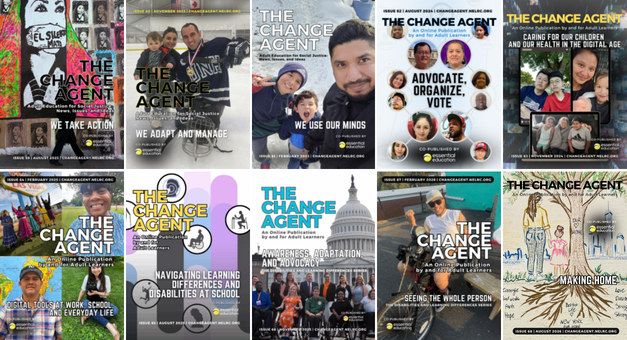 Three years ago, we teamed up with Essential Education to provide educators with powerful, socially relevant teaching tools and continue to center student voices. Today, we are incredibly proud to celebrate this impactful partnership, which has allowed us to co-publish multiple dynamic series, combining The Change Agent’s standards-aligned, student-written content with Essential Education’s incredible resources.
We want to extend a massive thank you to the entire team at Essential Education for their generous funding and expert support. Special shoutouts go to Jen Denton and Dannielle Doyle for their invaluable dedication and guidance on our editorial board.
Below, you’ll find an index of all articles across ten issues of The Change Agent co-published with Essential Education, made free with their support. We’re proud of what this partnership has produced, and we can’t wait to keep inspiring students and educators alike for years to come!
ISSUE |
TITLE |
PAGE |
LEVEL |
| Issue 67, February 2026 — Seeing the Whole Person |  Bullying: Worse than the Disability [Read][PDF] Bullying: Worse than the Disability [Read][PDF] |
3 | 5 |
| Issue 67, February 2026 — Seeing the Whole Person | My New Perspective on Life [Read][PDF] |
4 | 7 |
| Issue 67, February 2026 — Seeing the Whole Person | Losing My Friend and My Leg [Read][PDF] |
6 | 4 |
| Issue 67, February 2026 — Seeing the Whole Person | Learning to Live with 2 Prosthetic Hips [Read][PDF] |
8 | 6 |
| Issue 67, February 2026 — Seeing the Whole Person | Access Makes All the Difference [Read][PDF] |
9 | 6 |
| Issue 67, February 2026 — Seeing the Whole Person | Breaking the Silence [Read][PDF] | 10 | 5 |
| Issue 67, February 2026 — Seeing the Whole Person | Why Was I Tired All the Time? [Read][PDF] | 11 | 5 |
| Issue 67, February 2026 — Seeing the Whole Person | Emotional Trauma Can Be a Disability [Read][PDF] | 12 | 7 |
| Issue 67, February 2026 — Seeing the Whole Person | Anxiety, the Invisible Disability [Read][PDF] | 14 | 8 |
| Issue 67, February 2026 — Seeing the Whole Person | A Whole Woman [Read][PDF] | 16 | 6 |
| Issue 67, February 2026 — Seeing the Whole Person | Polio Could Not Defeat My Brother [Read][PDF] | 18 | 4 |
| Issue 67, February 2026 — Seeing the Whole Person | Lessons from My Brother [Read][PDF] | 20 | 6 |
| Issue 67, February 2026 — Seeing the Whole Person | My Uncle and Me [Read][PDF] | 22 | 7 |
| Issue 67, February 2026 — Seeing the Whole Person | That Boy [Read][PDF] | 24 | 4 |
| Issue 67, February 2026 — Seeing the Whole Person | Emmanuel [Read][PDF] | 25 | 6 |
| Issue 67, February 2026 — Seeing the Whole Person | An Unheard Life [Read][PDF] | 26 | 6 |
| Issue 67, February 2026 — Seeing the Whole Person | The U.S. Does a Good Job, But There Is Still Room for Improvement [Read][PDF] | 28 | 8 |
| Issue 67, February 2026 — Seeing the Whole Person | PTSD from the War [Read][PDF] | 30 | 5 |
| Issue 67, February 2026 — Seeing the Whole Person | People with Disabilities in Ukraine [Read][PDF] | 31 | 9 |
| Issue 66, November 2025 — Awareness, Adaptation, and Advocacy | Ability Is Not the Issue [Read + Listen][PDF] |
3 | 8 |
| Issue 66, November 2025 — Awareness, Adaptation, and Advocacy | What Labels Should We Use? [Read + Listen][PDF] |
5 | 7 |
| Issue 66, November 2025 — Awareness, Adaptation, and Advocacy | Deafness Can Be a Strength [Read + Listen][PDF] |
6 | 6 |
| Issue 66, November 2025 — Awareness, Adaptation, and Advocacy | Our Society Should Have a Place for Everyone [Read + Listen][PDF] |
8 | 10 |
| Issue 66, November 2025 — Awareness, Adaptation, and Advocacy | Speak, So the I May See [Read + Listen][PDF] |
10 | 9 |
| Issue 66, November 2025 — Awareness, Adaptation, and Advocacy | A Stroke Survivor Speaks Up [Read][PDF] | 12 | 4 |
| Issue 66, November 2025 — Awareness, Adaptation, and Advocacy | I Like to Be Heard [Read][PDF] | 13 | 5 |
| Issue 66, November 2025 — Awareness, Adaptation, and Advocacy | Helping Jesús on his Journey with Vasculitis [Read][PDF] | 14 | 9 |
| Issue 66, November 2025 — Awareness, Adaptation, and Advocacy | Empathy and Connection [Read][PDF] | 15 | 6 |
| Issue 66, November 2025 — Awareness, Adaptation, and Advocacy | Speak Up! [Read][PDF] | 16 | 4 |
| Issue 66, November 2025 — Awareness, Adaptation, and Advocacy | Help from Neighbors Is Not Enough [Read + Listen][PDF] |
17 | 3 |
| Issue 66, November 2025 — Awareness, Adaptation, and Advocacy | New Skills [Read][PDF] | 18 | 5 |
| Issue 66, November 2025 — Awareness, Adaptation, and Advocacy | A Girl with Down Syndrome [Read][PDF] | 19 | 6 |
| Issue 66, November 2025 — Awareness, Adaptation, and Advocacy | I Am My Child’s Advocate [Read][PDF] | 20 | 6 |
| Issue 66, November 2025 — Awareness, Adaptation, and Advocacy | Taking Charge of My Learning [Read][PDF] | 22 | 6 |
| Issue 66, November 2025 — Awareness, Adaptation, and Advocacy | Living with Fetal Alcohol Syndrome [Read][PDF] | 24 | 8 |
| Issue 66, November 2025 — Awareness, Adaptation, and Advocacy | A Short Life, A Long Lesson [Read][PDF] | 26 | 9 |
| Issue 66, November 2025 — Awareness, Adaptation, and Advocacy | Older People Need Support [Read][PDF] | 28 | 6 |
| Issue 66, November 2025 — Awareness, Adaptation, and Advocacy | Working with the Elderly [Read][PDF] | 29 | 8 |
| Issue 66, November 2025 — Awareness, Adaptation, and Advocacy | After My Granny Fell [Read][PDF] | 30 | 7 |
| Issue 66, November 2025 — Awareness, Adaptation, and Advocacy | A Collective Wound: Addiction in Native Americans [Read][PDF] | 32 | 10 |
| Issue 66, November 2025 — Awareness, Adaptation, and Advocacy | War Is Like a Disability [Read][PDF] | 34 | 6 |
| Issue 66, November 2025 — Awareness, Adaptation, and Advocacy | Social Media for Raising Awareness [Read][PDF] | 36 | 8 |
| Issue 64, February 2025 — Digital Tools at Work, School, and Everyday Life | An App Helped Me Find Treasure [Read + Listen][PDF] |
3 | 6 |
| Issue 64, February 2025 — Digital Tools at Work, School, and Everyday Life | A Strong and Daring Girl [Read + Listen][PDF] |
4 | 3 |
| Issue 64, February 2025 — Digital Tools at Work, School, and Everyday Life | A Strange Love Story [Read][PDF] | 6 | 5 |
| Issue 64, February 2025 — Digital Tools at Work, School, and Everyday Life | Technology Changes How Migration Feels [Read][PDF] | 8 | 6 |
| Issue 64, February 2025 — Digital Tools at Work, School, and Everyday Life | Scammed by an “Immigration Lawyer” [Read][PDF] | 9 | 4 |
| Issue 64, February 2025 — Digital Tools at Work, School, and Everyday Life | I Got Cheated [Read][PDF] | 10 | 4 |
| Issue 64, February 2025 — Digital Tools at Work, School, and Everyday Life | Who Am I Face-Timing With? [Read][PDF] | 11 | 5 |
| Issue 64, February 2025 — Digital Tools at Work, School, and Everyday Life | AI — My New Best Friend [Read][PDF] | 12 | 6 |
| Issue 64, February 2025 — Digital Tools at Work, School, and Everyday Life | Sophia, the Woman Robot [Read][PDF] | 13 | 8 |
| Issue 64, February 2025 — Digital Tools at Work, School, and Everyday Life | Proud to Be Mexicana [Read][PDF] | 14 | 6 |
| Issue 64, February 2025 — Digital Tools at Work, School, and Everyday Life | Apps Make My Life Easier [Read + Listen][PDF] |
16 | 6 |
| Issue 64, February 2025 — Digital Tools at Work, School, and Everyday Life | Discord [Read][PDF] | 17 | 7 |
| Issue 64, February 2025 — Digital Tools at Work, School, and Everyday Life | My Account Was Hacked [Read][PDF] | 18 | 7 |
| Issue 64, February 2025 — Digital Tools at Work, School, and Everyday Life | Kitty Cat Scam [Read][PDF] | 19 | 5 |
| Issue 64, February 2025 — Digital Tools at Work, School, and Everyday Life | From “The Jetsons” to Online English Lessons [Read][PDF] | 20 | 8 |
| Issue 64, February 2025 — Digital Tools at Work, School, and Everyday Life | From Telephone Booth to Digital World [Read][PDF] | 22 | 9 |
| Issue 64, February 2025 — Digital Tools at Work, School, and Everyday Life | Too Old to Register for College? [Read][PDF] | 24 | 6 |
| Issue 64, February 2025 — Digital Tools at Work, School, and Everyday Life | Technology at Construction Site [Read][PDF] | 26 | 11 |
| Issue 64, February 2025 — Digital Tools at Work, School, and Everyday Life | Digital Tools for a Hairdresser [Read][PDF] | 27 | 7 |
| Issue 64, February 2025 — Digital Tools at Work, School, and Everyday Life | Even a Florist Uses Digital Tools [Read][PDF] | 28 | 7 |
| Issue 64, February 2025 — Digital Tools at Work, School, and Everyday Life | My Dream Job [Read][PDF] | 29 | 8 |
| Issue 64, February 2025 — Digital Tools at Work, School, and Everyday Life | Invisible Thieves [Read][PDF] | 30 | 7 |
| Issue 64, February 2025 — Digital Tools at Work, School, and Everyday Life | Au Pair Beware [Read + Listen][PDF] |
32 | 5 |
| Issue 64, February 2025 — Digital Tools at Work, School, and Everyday Life | Pitfalls of the Internet [Read][PDF] | 34 | 9 |
| Issue 64, February 2025 — Digital Tools at Work, School, and Everyday Life | Dear Cybernauts [Read][PDF] | 36 | 7 |
| Issue 64, February 2025 — Digital Tools at Work, School, and Everyday Life | How to Check for Fake Websites [Read][PDF] | 37 | 7 |
| Issue 68, August 2026 — Making Home | Sanctuary Home [Read][PDF] | 3 | 5 |
| Issue 68, August 2026 — Making Home | Celebrating My Ideal Home: Community [Read][PDF] | 4 | 6 |
| Issue 68, August 2026 — Making Home | Building My Home Through Food [Read][PDF] | 5 | 6 |
| Issue 68, August 2026 — Making Home | A Place that Wasn’t Always a Home [Read][PDF] | 6 | 6 |
| Issue 68, August 2026 — Making Home | I Didn’t Find a Home. I Had to Build It. [Read][PDF] | 8 | 6 |
| Issue 68, August 2026 — Making Home | Speaking Up About My Housing [Read][PDF] | 10 | 7 |
| Issue 68, August 2026 — Making Home | ICE Makes Us Feel Less Safe [Read][PDF] | 11 | 9 |
| Issue 68, August 2026 — Making Home | A Nomad Looks for Home [Read][PDF] | 12 | 3 |
| Issue 68, August 2026 — Making Home | Since Mom Came [Read][PDF] | 13 | 4 |
| Issue 68, August 2026 — Making Home | What Home Means to Me [Read][PDF] | 14 | 3 |
| Issue 68, August 2026 — Making Home | The Architecture of Us [Read][PDF] | 16 | 6 |
| Issue 68, August 2026 — Making Home | Home Begins Within [Read][PDF] | 17 | 6 |
| Issue 68, August 2026 — Making Home | My Daughter Helped Me Build a Life Here [Read][PDF] | 18 | 5 |
| Issue 68, August 2026 — Making Home | “Home” Was Something to Survive [Read][PDF] | 20 | 5 |
| Issue 68, August 2026 — Making Home | Forever in My Heart – My Dog Abby [Read][PDF] | 22 | 4 |
| Issue 68, August 2026 — Making Home | Me and My Cats [Read][PDF] | 24 | 3 |
| Issue 68, August 2026 — Making Home | Home, Sweet Home [Read][PDF] | 25 | 4 |
| Issue 68, August 2026 — Making Home | Home Is Where the Board Games Are [Read][PDF] | 26 | 9 |
| Issue 68, August 2026 — Making Home | My Family and Our Imperfect Home [Read][PDF] | 28 | 6 |
| Issue 68, August 2026 — Making Home | A Well Decorated Home [Read][PDF] | 30 | 5 |
| Issue 68, August 2026 — Making Home | Home Is Where I Feel Most Loved [Read][PDF] | 31 | 6 |
| Issue 68, August 2026 — Making Home | House + Joy = Love [Read][PDF] | 32 | 6 |
| Issue 68, August 2026 — Making Home | No Place Like Home [Read][PDF] | 33 | 6 |
| Issue 68, August 2026 — Making Home | Where I’m From [Read][PDF] | 33 | 6 |