New Skills


headphones 3 WAYS TO LISTEN

1. Click the icon on the right to listen to the full article (coming soon).
2. Right-click here and “save as” or “save link as” to save an mp3 of the article to your computer (coming soon).
3. Listen to sections of the article by pressing the play buttons that appear before a set of words in the article below (coming soon).

New Skills


Alper Cakir

BEFORE YOU READ:
1. Name various ways of communicating. Which ones do you use?
2. Have you ever tried to communicate with someone who didn’t communicate the same way you do? What did you do?

Workers Who Could Not Hear
In 2014, I was working at a company in Turkey. They hired people who don’t speak and don’t hear. They sent one of these people to my area. We didn’t know what to do. How could we communicate?

It was a really hard time for me and my colleagues. We wrote notes on our phones and showed them to each other. That was one way to understand each other, but we thought there must be another way. I asked this person, “How can we communicate with you without writing?” He tried to teach the alphabet in sign language. It was hard to learn. But I tried.

Learning Sign Language
When I started to learn, I was very slow. I could not make the letters with my hands. However, after a couple of weeks, I got better. I felt more comfortable. I used my hands to spell out words. I communicated very slowly, but I was communicating. Soon, my colleagues started to learn the sign language alphabet too. They were better than me! They learned not just the alphabet, but they also learned the signs for some words.

A Chance to Grow
I realized something about the situation. There are a lot of ways to communicate. Having this person in our workplace gave us a chance to learn something new. We learned about diverse ways to communicate. Diversity can make the team stronger. We had a challenge, and we all looked for solutions. People with disabilities should be integrated into society. We can all learn from each other and grow.

AFTER YOU READ:
1. What is the author’s main point? How does it compare the main idea in the article on p. 19?
2. The author says, “Diversity can make the team stronger.” In what ways does his team get stronger due to diversity? Can you share a story of confronting a challenge and learning something new as a result?


Alper Cakir came to the U.S. from Turkey two years ago. He studies ESL at the Thomas Jefferson Adult Career Education program in Charlottesville, Virginia, and he works at UVA in the Finance Department. He enjoys following NBA games. When he was in Turkey, he woke up before dawn to watch the games. Now he is happy because he can watch the games at normal times.
Back to Issue 66

Speak Up!


headphones 3 WAYS TO LISTEN

1. Click the icon on the right to listen to the full article (coming soon).
2. Right-click here and “save as” or “save link as” to save an mp3 of the article to your computer (coming soon).
3. Listen to sections of the article by pressing the play buttons that appear before a set of words in the article below (coming soon).

Speak Up!

Adrian Ceron

BEFORE YOU READ:
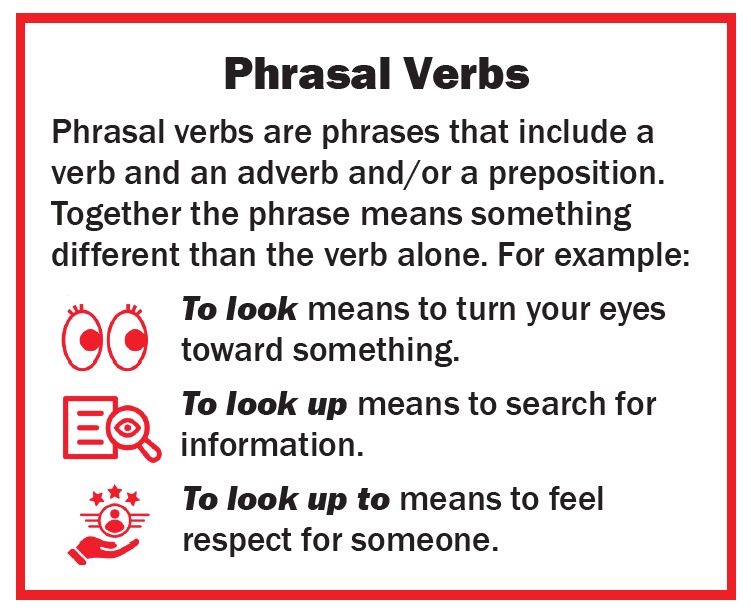
What is the difference between to speak and to speak up? Read about phrasal verbs in the box below.

She Needed Help
One day, I gave a ride to an old woman. She was in a wheelchair. We arrived at her home. I helped her go inside. Her home was a mess. She told me that she lives alone. She said, “I don’t have anyone to help me.” She could not clean her home. She could not do many things that she needs to do. I felt bad. She needed help. Where is the help for this woman?

People Can’t Do Everything By Themselves
We need to speak up about this. The government needs to make some changes. People need help. People can’t do everything by themselves. The government should give them support. The government should hire good workers who can help them.

The Government Should Provide Support
There is another thing the government should do. The government should make sure that all buildings have automatic doors. All buildings should have ramps. People in wheelchairs should be able to go where they want. They should be able to go to school and feel welcome.

I didn’t know how to get help for this woman. I didn’t know who to ask. I hope she was able to find help.

AFTER YOU READ:
1. What experience did Adrian have? How did his experience influence his thinking?
2. Should is a modal verb. It is used with the main verb to give advice. How does the author use should? What does he think the government should do?


Adrian Ceron is a student at Ysleta Community Learning Center in El Paso, Texas.

Back to Issue 66

Empathy and Connection


headphones 3 WAYS TO LISTEN

1. Click the icon on the right to listen to the full article.
2. Right-click here and “save as” or “save link as” to save an mp3 of the article to your computer.
3. Listen to sections of the article by pressing the play buttons that appear before a set of words in the article below (coming soon).

Empathy and Connection

Edna Contreras

BEFORE YOU READ:
What does empathy mean? How is it different from sympathy?

Watching a Family Struggle
A few months ago, I was standing in line to cross the border from Mexico into the U.S. Behind me there was a woman with two children. They were twins. They were very restless.

I watched and listened, and I understood that there was something different about them. The twins were becoming more and more frustrated. They yelled at their mother, begged for food, and fought with each other.

Nearby, there was a group of teenagers. They were a few years older than the twin brothers. The teenagers looked at the twins with disdain and then burst out laughing. They made fun of the brothers, and suddenly the mother started to cry. At that moment my instinct told me to do something.

Deciding to Do Something
I turned to the twins, and I smiled at them. I asked them if they were okay. I talked with the twins and their mom. Little by little, the tension and frustration disappeared.

The mother explained to me that the twins had autism. She said they sometimes have a crisis in public, and it is stressful. She thanked me for understanding and helping to calm them down. She said that many people mock or just ignore them. But some people do something to help. Finally, we crossed the border and said goodbye smiling.

AFTER YOU READ:
1. What did the author do to help? How or why was it helpful?
2. What do restless, disdain, and mock mean? Try to figure it out from the context. Try writing your own sentences using those words.
3. Share a time you have witnessed someone expressing disdain or mockery. Did you do something to interrupt it? Why or why not?


Edna Contreras is a student at Ysleta Community Learning Center in El Paso, Texas. She is a single mother of two children and loves to help her neighborhood and her family. She plans to continue with her education and get a career. She is a very optimistic woman.

Back to Issue 66

Helping Jesús on his Journey with Vasculitis


headphones 3 WAYS TO LISTEN

1. Click the icon on the right to listen to the full article.
2. Right-click here and “save as” or “save link as” to save an mp3 of the article to your computer.
3. Listen to sections of the article by pressing the play buttons that appear before a set of words in the article below (coming soon).

Helping Jesús on his Journey with Vasculitis

Nictéha Morales

A Heartbreaking Diagnosis
My brother-in-law, Jesús, is 68 years old. He retired three years ago with dreams of enjoying time with family and pursuing his hobbies. However, shortly after his retirement, he was diagnosed with severe vasculitis.

Everything changed. The disease affected his blood vessels and made him almost blind. It also brought depression, anxiety, and physical challenges like swollen feet and unstable blood sugar. Seeing him lose his independence was heartbreaking. I knew I had to step in and help him rebuild his life as much as possible.

Adapting His Home
One of the first things I did was adapt his home to make it easier for him to move around. I moved the furniture to create clear, open spaces, so he could walk without bumping into things. Simple changes like these gave him more freedom and helped him feel less frustrated about his situation.

Taking Him to Appointments
To support Jesús physically, I take him to all of his physical therapy sessions. These appointments are important because physical therapy helps improve his circulation and balance. Getting him there safely and encouraging him through every session has become a big part of our routine. It’s hard work, but seeing his small improvements keeps us both motivated.

Helping Him Use Technology
I also helped Jesús use technology. I set up his phone to work with Siri so he can make calls, send text messages, and set alarms by using just his voice. Now, he can independently call family members and text friends. His phone reminds him to take his medications on time. Teaching him to use these tools gave him back some independence and a sense of connection to the world.

Finding Strength and Hope
Helping Jesús through this journey has taught me patience, creativity, and compassion. Every adaptation in his home, every ride to therapy, every conversation, and every technical support matters. Even though vasculitis has changed many things, we continue moving forward together. We are proving that with love, understanding, and support, it’s possible to find strength and hope even in the hardest times.

AFTER YOU READ:
Study the structure of this essay. Identify the introduction, the three body paragraphs, and the conclusion. Using this piece as a model, write about a time you supported someone in some way. Start by writing an outline. Identify three solid ways you supported that person. Those will be your three body paragraphs. Write the introduction and conclusion.


Nictéha Morales, 48, was born and raised in Chihuahua, Mexico. She is a student at the Ysleta Community Learning Center in El Paso, Texas, and she is the proud wife of a wonderful man and mother to a devoted son who inspires her every day. With a deep passion for all she undertakes, Nictéha embodies integrity, resilience, and a tireless drive for growth.

Back to Issue 66

I Like to Be Heard


headphones 3 WAYS TO LISTEN

1. Click the icon on the right to listen to the full article.
2. Right-click here and “save as” or “save link as” to save an mp3 of the article to your computer.
3. Listen to sections of the article by pressing the play buttons that appear before a set of words in the article below (coming soon).

I Like to Be Heard

Kristal L. Santos

BEFORE YOU READ:
What do you think the author means by the title?

I Stayed in a Corner
As a child, I would not speak. I had some trauma in my life that affected my ability to say what I was feeling. I could not put my feelings into words. I stayed in a corner and played by myself.

When the adults in my life did not understand me, I got frustrated and angry and acted out. I communicated by pointing at pictures in books and magazines. Later, when I had a cell phone, I took pictures of myself in order to tell a story. That’s how I expressed myself.

The World Judged Me
As a child, I had a learning disability and a speech impairment. It was very difficult for me to be heard. These difficulties affected my teen and young adult years. I became a single mother, and the world judged me. I received help from social services. But not for long. They said I was not competent to raise my children because of my education and my learning disability.

I tried to speak up for myself, but I felt that I was not being heard. I felt that other people were more educated than I was. I believed they were better than me. This was not helping my self-confidence.

Sometimes, the people in my life used my disability as a weapon to their advantage. Their information and guidance did not help me. I did not trust them. I was always angry and sad. I cried a lot, thinking that I was not being heard every time I spoke out loud.

I Found Faith and My Voice
Then one day in my young adult years, I was walking down the street with my mother. She was talking. I was talking. I turned and saw a church.

All of a sudden, I heard a voice. And that voice caught my attention. The voice was telling me that this will be the church that I will attend.

I was looking for a church at the time. I had prayed that God would point out a good church. This is how I found faith. This is how I started on the road to being the person I am today. My faith helped me conquer the things that I needed to conquer—like speaking out loud.

Now, people can hear me. I am learning to advocate for myself. Recently I had to demand that a false description of my abilities in an official job referral be corrected. It wasn’t easy. I followed my inner voice.

AFTER YOU READ:
What are some to the ways Kristal has not been heard in her life? Share some ways you have been heard or perhaps not heard in your life.


Kristal L. Santos attends the Bridge Program at the Community College of RI in Providence, RI. She loves making specialty salads for members and staff of the Hillsgrove Clubhouse, a member- and staff-run mental health recovery program. She sincerely wishes readers of this article will be inspired to speak out and be heard!

Back to Issue 66